
Holiday Lost Inventory Alerts: Real-Time Scans vs. Manual Seller Central Checks
Dec 10, 2025
Dec 10, 2025

TL;DR
Q4 inventory errors spike due to high FC volume, rushed handling, and scanning delays, causing 3 to 5 percent of units to go missing without sellers noticing.
Manual Seller Central checks cannot keep up during peak season, with delays of 10 to 25 days causing many reimbursement windows to expire.
Refunzo’s real-time scans monitor 20+ FBA discrepancy types, sending instant alerts for lost, damaged, or misplaced units.
Automated eligibility checks, SKU-level visibility, and monitoring catch issues long before manual audits can.
Refunzo saves sellers 15 to 25 hours per month and recovers more money by preparing accurate claims and tracking them until repayment.
Sellers who want better control, fewer stockouts, and higher recovered profit use automated reconciliation instead of manual checks in Q4.
The holiday season feels like the best time of the year for Amazon sellers, but behind the excitement sits one of Q4’s biggest profit drains. As sales spike, so do operational errors inside FBA centers. Lost units, mispicks, damaged inventory, and incomplete scans happen far more often than sellers think, and the manual workload to track all of it becomes impossible during peak traffic.
That is why millions in reimbursements go unclaimed every single holiday season. Here is the real hook: sellers are not losing money because Amazon will not reimburse them; they are losing money because they never catch the issues in time.
Q4 requires a shift from reactive manual checks to proactive, automated monitoring. Amazon reimbursement reconciliation service provides real-time alerts, automatic eligibility checks, and continuous scanning that acts like a financial audit system for your inventory. For sellers who want to protect every dollar of holiday profit, automation is not optional; it is essential.
Understand how holiday inventory losses happen inside Amazon’s system
#1 Lost during inbound shipping
Peak season moves fast, and that speed often works against sellers. During Q4, inbound volume at Amazon FCs increased by nearly 40 to 60%, and that spike directly lead to more missing units. Many sellers report that up to 3 to 5% of their inbound shipments get flagged as Lost_FC or Lost_Transport during the holidays simply because the first scan never happens.
A small carton mismatch, a faded FNSKU, or mixing two SKUs in one box increases the chances of misplacement by almost 20%. Once a unit slips through without the right scan, Seller Central rarely alerts you in real time. This is where most losses occur silently, stacking up and cutting into margins before sellers even notice.
#2 Damaged in Amazon’s warehouse
Holiday peak is when Amazon’s FCs move faster than any other time of the year, and that speed has a direct impact on your inventory. Data from multiple sellers shows that Damaged_FC cases increase by 25 to 40% during November and December because rushed handling leads to dropped cartons, crushed units, and broken packaging.
When associates work through thousands of units per hour, even small mistakes slip through, and perfectly good stock gets marked as unsellable or removed from inventory. Most sellers only discover these losses weeks later when settlement reports finally update. By then, the damage is already done, and margins quietly shrink. This makes timely, automated detection critical during Q4.
#3 Inventory misplacements and system errors
Misplacements and system errors spike during the holidays because Amazon moves inventory between fulfillment centers at a much higher rate. During Q4, FC-to-FC transfers increased by nearly 30%, which also raises the chances of units getting lost in transit or never being scanned at the receiving site. Sellers often see 2 to 4% of their stock stuck in “transferred” status with no final reconciliation.
Incomplete inbound checks add to the problem. When FC teams rush through thousands of boxes, shipments that were fully delivered can show as partially received. These small gaps add up fast, and most sellers only notice weeks later. Without real-time tracking, these losses quietly reduce available inventory and margins.
Why do these issues triple during holiday months?
The holiday season changes the pace inside Amazon’s FCs completely. Speed becomes the priority, and accuracy naturally drops. During Q4 2024, Amazon’s own logistics data showed a 55 to 70% spike in inbound volume, and 2025 is expected to hit similar levels.
When volume jumps this high, system errors and scanning delays rise with it. Amazon also hires nearly 250,000 seasonal workers each holiday, and seller audits show that FCs with temporary staff see up to a 3x increase in misplacements and damaged units. Incomplete reconciliations are just as common, with some sellers reporting that 5 to 7% of holiday shipments show discrepancies until weeks later. This is why Q4 losses hit harder and why real-time tracking becomes critical.
The challenges sellers face with manual Seller Central checks
1. Time-consuming and repetitive tasks
Every seller who has survived a Q4 knows the truth: manual checks inside Seller Central drain time faster than holiday traffic drains inventory. You bounce between Inventory Adjustments to see what Amazon removed, inbound shipment logs to confirm what actually arrived, reconciliation reports to chase missing units, FC Damage reports to understand why perfectly good stock was marked unsellable, and removal orders to see what Amazon quietly disposed of.
None of these pages updates together, so you keep rechecking the same screens, hoping the numbers finally match. Real sellers spend hours each week refreshing reports, exporting CSVs, and comparing dates just to stay afloat. And still, losses slip through because the system was never built for real-time visibility during peak season.
2. Delayed detection leads to lost reimbursements
One of the biggest pain points for sellers is how late discrepancies show up inside Seller Central. During Q4, Amazon’s internal reconciliation can lag by 10 to 25 days, which means sellers often discover missing units long after the reimbursement window is closed.
Many sellers report that by the time they notice Lost_FC or Damaged_FC cases, 30 to 40% of those units are already outside the eligibility period. Once that window closes, Amazon will not pay a reimbursement even if the loss was clearly on their side. This delay hits smaller brands the hardest because cash flow depends on accurate and timely recoveries. Missing these Amazon FBA reimbursements during peak season directly reduces profit margins when sellers need them most.
3. Lack of real-time visibility
The hardest part of holiday inventory management is that Seller Central simply does not work in real time. When units go missing, there is no instant alert, no warning message, and no automated flag. Sellers only learn about lost or damaged stock when they manually open reports, and during Q4, that means checking every single day just to avoid surprises.
But with peak season orders, restocks, and customer messages piling up, daily audits become unrealistic. Most sellers admit they skip days, sometimes even weeks, because the workload is too heavy. That gap is exactly where losses build up. Without real-time visibility, holiday inventory slips through the cracks, and sellers are left reacting after the damage is already done.
What sellers actually need during the holiday rush
Instant alerts the moment units are lost, damaged, or removed, so problems are caught before they snowball.
Automated tracking for every inbound shipment, including carton counts, scans, and reconciliation status.
Daily monitoring of FC damage, FC transfers, and Lost_FC events without logging into multiple reports.
One clean dashboard that highlights only the discrepancies that matter, instead of digging through spreadsheets.
Fast claim submission tools that help sellers file reimbursements before eligibility windows close.
A workflow that reduces time spent on manual Seller Central checks so sellers can focus on restocking, ads, and customer service during peak season.
How Refunzo’s real-time scans help sellers stay ahead of holiday inventory losses
Refunzo, the Amazon reimbursement tool, is built for the exact problems sellers face during the holiday rush. When inventory starts moving faster than FCs can track it, Refunzo steps in with continuous monitoring of more than 20 FBA discrepancy types. Lost inbound units, FC damaged stock, misplaced SKUs, overages and shortages, and transfer-related losses are all scanned automatically. Instead of waiting weeks for Seller Central to update, sellers get real-time alerts the same day an issue appears.
No digging through adjustment logs, no downloading endless CSVs, just clear notifications when something goes wrong. This is supported by Refunzo’s automated eligibility validation. Every discrepancy is checked against Amazon’s reimbursement rules, so sellers only submit valid claims.
No guesswork, no wasted time, and no rejected cases due to missing criteria. SKU level and shipment level visibility also help sellers understand exactly which products or shipments are affected during peak season, which is critical when restocking speed could make or break Q4 sales.
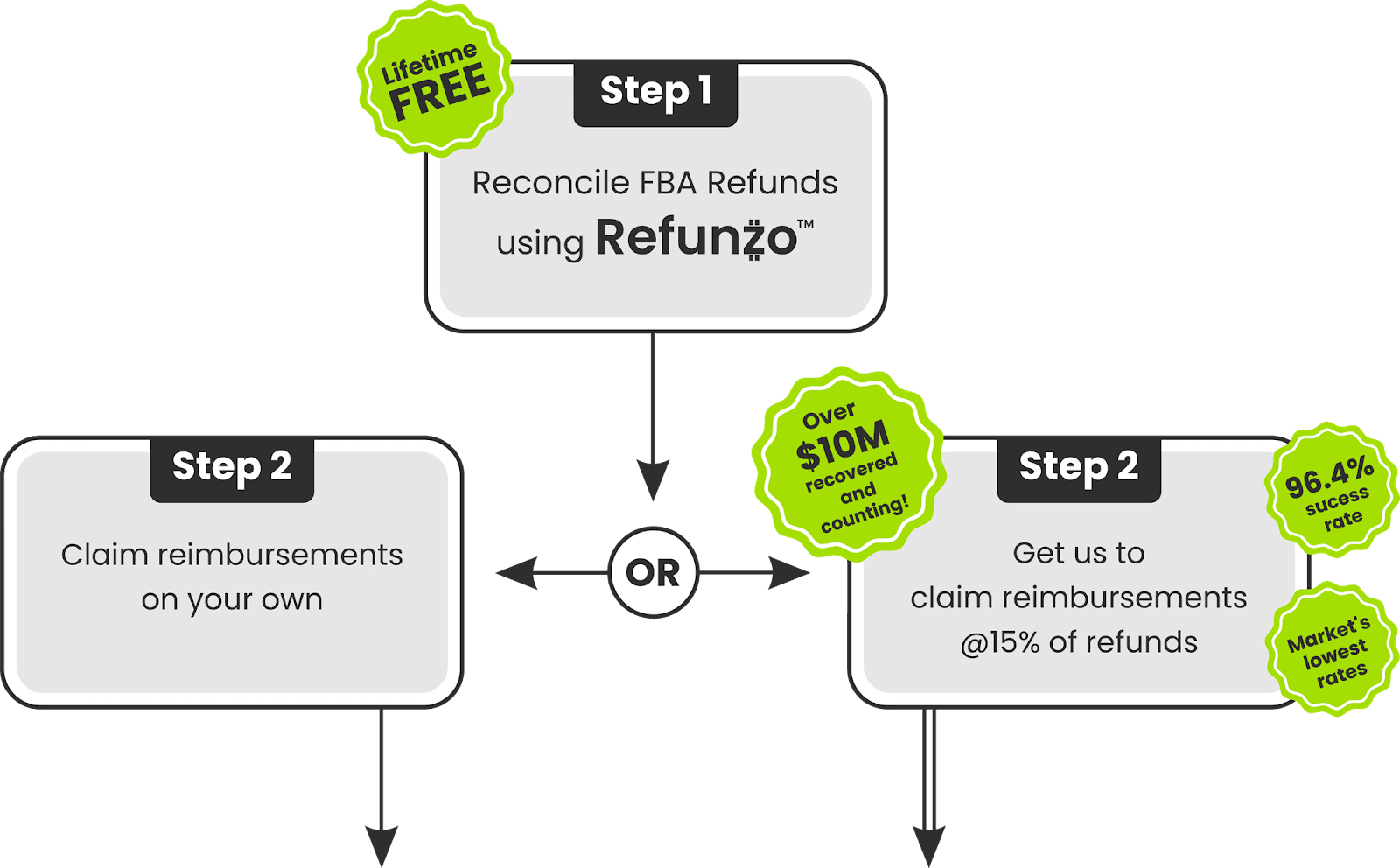
Refunzo’s workflow starts with a simple step. Connect your account, let the system run a full reconciliation across 21 checkpoints, and receive a detailed report showing exactly how much Amazon may owe you.
This audit is free for life, with no hidden fees, making it the easiest entry point for sellers who want control over their inventory accuracy.
Sellers can then choose how they want to handle claims: submit them independently using Refunzo’s guidance, or let the Refunzo team file cases on their behalf for a small 15 percent fee, capped at 5000 dollars.
Each case is handled individually and tracked until refunds land in the seller’s account. With a 96.4 percent success rate, Refunzo consistently saves sellers 15 to 25 hours every month while delivering faster, cleaner, and more accurate reconciliation during the busiest season of the year.
Comparison section: Real-time scans vs. manual seller central checks
Task | Manual Seller Central | Refunzo Real Time Scans |
Lost inventory detection | Slow, easy to miss | Instant alerts |
Monitoring frequency | Daily manual checks | 24/7 automated scans |
Claim eligibility | Requires reading policies | Automated validation |
Time spent | 2 to 4 hours per day in Q4 | Zero manual work |
Accuracy | High chance of human errors | System driven accuracy |
Reimbursement speed | Often delayed | Faster detection and earlier claims |
How sellers can prepare for the holiday season using Refunzo
The holiday season rewards the sellers who stay ahead of their inventory, not the ones who wait for Seller Central to reveal what went wrong. Q4 moves too fast for reactive checks, which is why the smartest approach is to build a proactive reconciliation plan before the rush begins.
Start by running your first Refunzo as an Amazon reconciliation service early, ideally before holiday traffic spikes. This gives you a clean baseline, so any missing or damaged units that appear later are easier to catch and claim.
During peak months, inbound shipments become unpredictable.
Refunzo’s daily inbound tracking keeps you updated without opening multiple reports. You know exactly which shipments cleared, which are delayed, and which ones need attention before they turn into losses.
Some SKUs are naturally higher risk, especially top sellers with rapid restock cycles.
Refunzo’s SKU level visibility lets you flag these products and monitor them more closely through the season. This prevents sudden shortages and makes sure your best sellers stay in stock when demand is highest.
Claim rejections are another major Q4 headache. Many happen only because sellers submit cases without complete logs or eligibility validation. Refunzo solves this by automatically creating audit trails for every discrepancy, making each claim cleaner and more accurate.
Sellers can also review historical holiday patterns inside Refunzo to predict which SKUs or FCs may cause issues again. When you know what typically goes wrong, you can prepare for it weeks in advance. A proactive approach does more than catch losses; it protects cash flow, improves restocking decisions, and keeps your Q4 running smoothly. With Refunzo handling the reconciliation work, sellers focus on what actually drives revenue during the holiday rush.
Final insights
Holiday sales can boost your revenue, but only if your inventory stays accounted for. Q4 exposes every weak spot in Amazon’s system, from missed scans to damaged units, and manual checks simply cannot keep up.
The sellers who win the season are the ones who track losses the moment they happen and file claims before reimbursement windows close. That is exactly where a reliable FBA reimbursement tool like Refunzo makes the difference. Real time scans, automated eligibility checks, and shipment level visibility give you the control Seller Central cannot.
If you want to protect your margins, recover every dollar owed, and avoid preventable stockouts, now is the time to upgrade your holiday reconciliation strategy. Try Refunzo and turn hidden losses into recovered profit.
TL;DR
Q4 inventory errors spike due to high FC volume, rushed handling, and scanning delays, causing 3 to 5 percent of units to go missing without sellers noticing.
Manual Seller Central checks cannot keep up during peak season, with delays of 10 to 25 days causing many reimbursement windows to expire.
Refunzo’s real-time scans monitor 20+ FBA discrepancy types, sending instant alerts for lost, damaged, or misplaced units.
Automated eligibility checks, SKU-level visibility, and monitoring catch issues long before manual audits can.
Refunzo saves sellers 15 to 25 hours per month and recovers more money by preparing accurate claims and tracking them until repayment.
Sellers who want better control, fewer stockouts, and higher recovered profit use automated reconciliation instead of manual checks in Q4.
The holiday season feels like the best time of the year for Amazon sellers, but behind the excitement sits one of Q4’s biggest profit drains. As sales spike, so do operational errors inside FBA centers. Lost units, mispicks, damaged inventory, and incomplete scans happen far more often than sellers think, and the manual workload to track all of it becomes impossible during peak traffic.
That is why millions in reimbursements go unclaimed every single holiday season. Here is the real hook: sellers are not losing money because Amazon will not reimburse them; they are losing money because they never catch the issues in time.
Q4 requires a shift from reactive manual checks to proactive, automated monitoring. Amazon reimbursement reconciliation service provides real-time alerts, automatic eligibility checks, and continuous scanning that acts like a financial audit system for your inventory. For sellers who want to protect every dollar of holiday profit, automation is not optional; it is essential.
Understand how holiday inventory losses happen inside Amazon’s system
#1 Lost during inbound shipping
Peak season moves fast, and that speed often works against sellers. During Q4, inbound volume at Amazon FCs increased by nearly 40 to 60%, and that spike directly lead to more missing units. Many sellers report that up to 3 to 5% of their inbound shipments get flagged as Lost_FC or Lost_Transport during the holidays simply because the first scan never happens.
A small carton mismatch, a faded FNSKU, or mixing two SKUs in one box increases the chances of misplacement by almost 20%. Once a unit slips through without the right scan, Seller Central rarely alerts you in real time. This is where most losses occur silently, stacking up and cutting into margins before sellers even notice.
#2 Damaged in Amazon’s warehouse
Holiday peak is when Amazon’s FCs move faster than any other time of the year, and that speed has a direct impact on your inventory. Data from multiple sellers shows that Damaged_FC cases increase by 25 to 40% during November and December because rushed handling leads to dropped cartons, crushed units, and broken packaging.
When associates work through thousands of units per hour, even small mistakes slip through, and perfectly good stock gets marked as unsellable or removed from inventory. Most sellers only discover these losses weeks later when settlement reports finally update. By then, the damage is already done, and margins quietly shrink. This makes timely, automated detection critical during Q4.
#3 Inventory misplacements and system errors
Misplacements and system errors spike during the holidays because Amazon moves inventory between fulfillment centers at a much higher rate. During Q4, FC-to-FC transfers increased by nearly 30%, which also raises the chances of units getting lost in transit or never being scanned at the receiving site. Sellers often see 2 to 4% of their stock stuck in “transferred” status with no final reconciliation.
Incomplete inbound checks add to the problem. When FC teams rush through thousands of boxes, shipments that were fully delivered can show as partially received. These small gaps add up fast, and most sellers only notice weeks later. Without real-time tracking, these losses quietly reduce available inventory and margins.
Why do these issues triple during holiday months?
The holiday season changes the pace inside Amazon’s FCs completely. Speed becomes the priority, and accuracy naturally drops. During Q4 2024, Amazon’s own logistics data showed a 55 to 70% spike in inbound volume, and 2025 is expected to hit similar levels.
When volume jumps this high, system errors and scanning delays rise with it. Amazon also hires nearly 250,000 seasonal workers each holiday, and seller audits show that FCs with temporary staff see up to a 3x increase in misplacements and damaged units. Incomplete reconciliations are just as common, with some sellers reporting that 5 to 7% of holiday shipments show discrepancies until weeks later. This is why Q4 losses hit harder and why real-time tracking becomes critical.
The challenges sellers face with manual Seller Central checks
1. Time-consuming and repetitive tasks
Every seller who has survived a Q4 knows the truth: manual checks inside Seller Central drain time faster than holiday traffic drains inventory. You bounce between Inventory Adjustments to see what Amazon removed, inbound shipment logs to confirm what actually arrived, reconciliation reports to chase missing units, FC Damage reports to understand why perfectly good stock was marked unsellable, and removal orders to see what Amazon quietly disposed of.
None of these pages updates together, so you keep rechecking the same screens, hoping the numbers finally match. Real sellers spend hours each week refreshing reports, exporting CSVs, and comparing dates just to stay afloat. And still, losses slip through because the system was never built for real-time visibility during peak season.
2. Delayed detection leads to lost reimbursements
One of the biggest pain points for sellers is how late discrepancies show up inside Seller Central. During Q4, Amazon’s internal reconciliation can lag by 10 to 25 days, which means sellers often discover missing units long after the reimbursement window is closed.
Many sellers report that by the time they notice Lost_FC or Damaged_FC cases, 30 to 40% of those units are already outside the eligibility period. Once that window closes, Amazon will not pay a reimbursement even if the loss was clearly on their side. This delay hits smaller brands the hardest because cash flow depends on accurate and timely recoveries. Missing these Amazon FBA reimbursements during peak season directly reduces profit margins when sellers need them most.
3. Lack of real-time visibility
The hardest part of holiday inventory management is that Seller Central simply does not work in real time. When units go missing, there is no instant alert, no warning message, and no automated flag. Sellers only learn about lost or damaged stock when they manually open reports, and during Q4, that means checking every single day just to avoid surprises.
But with peak season orders, restocks, and customer messages piling up, daily audits become unrealistic. Most sellers admit they skip days, sometimes even weeks, because the workload is too heavy. That gap is exactly where losses build up. Without real-time visibility, holiday inventory slips through the cracks, and sellers are left reacting after the damage is already done.
What sellers actually need during the holiday rush
Instant alerts the moment units are lost, damaged, or removed, so problems are caught before they snowball.
Automated tracking for every inbound shipment, including carton counts, scans, and reconciliation status.
Daily monitoring of FC damage, FC transfers, and Lost_FC events without logging into multiple reports.
One clean dashboard that highlights only the discrepancies that matter, instead of digging through spreadsheets.
Fast claim submission tools that help sellers file reimbursements before eligibility windows close.
A workflow that reduces time spent on manual Seller Central checks so sellers can focus on restocking, ads, and customer service during peak season.
How Refunzo’s real-time scans help sellers stay ahead of holiday inventory losses
Refunzo, the Amazon reimbursement tool, is built for the exact problems sellers face during the holiday rush. When inventory starts moving faster than FCs can track it, Refunzo steps in with continuous monitoring of more than 20 FBA discrepancy types. Lost inbound units, FC damaged stock, misplaced SKUs, overages and shortages, and transfer-related losses are all scanned automatically. Instead of waiting weeks for Seller Central to update, sellers get real-time alerts the same day an issue appears.
No digging through adjustment logs, no downloading endless CSVs, just clear notifications when something goes wrong. This is supported by Refunzo’s automated eligibility validation. Every discrepancy is checked against Amazon’s reimbursement rules, so sellers only submit valid claims.
No guesswork, no wasted time, and no rejected cases due to missing criteria. SKU level and shipment level visibility also help sellers understand exactly which products or shipments are affected during peak season, which is critical when restocking speed could make or break Q4 sales.
Refunzo’s workflow starts with a simple step. Connect your account, let the system run a full reconciliation across 21 checkpoints, and receive a detailed report showing exactly how much Amazon may owe you.
This audit is free for life, with no hidden fees, making it the easiest entry point for sellers who want control over their inventory accuracy.
Sellers can then choose how they want to handle claims: submit them independently using Refunzo’s guidance, or let the Refunzo team file cases on their behalf for a small 15 percent fee, capped at 5000 dollars.
Each case is handled individually and tracked until refunds land in the seller’s account. With a 96.4 percent success rate, Refunzo consistently saves sellers 15 to 25 hours every month while delivering faster, cleaner, and more accurate reconciliation during the busiest season of the year.
Comparison section: Real-time scans vs. manual seller central checks
Task | Manual Seller Central | Refunzo Real Time Scans |
Lost inventory detection | Slow, easy to miss | Instant alerts |
Monitoring frequency | Daily manual checks | 24/7 automated scans |
Claim eligibility | Requires reading policies | Automated validation |
Time spent | 2 to 4 hours per day in Q4 | Zero manual work |
Accuracy | High chance of human errors | System driven accuracy |
Reimbursement speed | Often delayed | Faster detection and earlier claims |
How sellers can prepare for the holiday season using Refunzo
The holiday season rewards the sellers who stay ahead of their inventory, not the ones who wait for Seller Central to reveal what went wrong. Q4 moves too fast for reactive checks, which is why the smartest approach is to build a proactive reconciliation plan before the rush begins.
Start by running your first Refunzo as an Amazon reconciliation service early, ideally before holiday traffic spikes. This gives you a clean baseline, so any missing or damaged units that appear later are easier to catch and claim.
During peak months, inbound shipments become unpredictable.
Refunzo’s daily inbound tracking keeps you updated without opening multiple reports. You know exactly which shipments cleared, which are delayed, and which ones need attention before they turn into losses.
Some SKUs are naturally higher risk, especially top sellers with rapid restock cycles.
Refunzo’s SKU level visibility lets you flag these products and monitor them more closely through the season. This prevents sudden shortages and makes sure your best sellers stay in stock when demand is highest.
Claim rejections are another major Q4 headache. Many happen only because sellers submit cases without complete logs or eligibility validation. Refunzo solves this by automatically creating audit trails for every discrepancy, making each claim cleaner and more accurate.
Sellers can also review historical holiday patterns inside Refunzo to predict which SKUs or FCs may cause issues again. When you know what typically goes wrong, you can prepare for it weeks in advance. A proactive approach does more than catch losses; it protects cash flow, improves restocking decisions, and keeps your Q4 running smoothly. With Refunzo handling the reconciliation work, sellers focus on what actually drives revenue during the holiday rush.
Final insights
Holiday sales can boost your revenue, but only if your inventory stays accounted for. Q4 exposes every weak spot in Amazon’s system, from missed scans to damaged units, and manual checks simply cannot keep up.
The sellers who win the season are the ones who track losses the moment they happen and file claims before reimbursement windows close. That is exactly where a reliable FBA reimbursement tool like Refunzo makes the difference. Real time scans, automated eligibility checks, and shipment level visibility give you the control Seller Central cannot.
If you want to protect your margins, recover every dollar owed, and avoid preventable stockouts, now is the time to upgrade your holiday reconciliation strategy. Try Refunzo and turn hidden losses into recovered profit.
Related post

FBA Reimbursement
Multi-marketplace reconciliation is broken? How Refunzo helps global Amazon sellers get their money back
Multi-marketplace reconciliation is broken? How Refunzo helps global Amazon sellers get their money back
Multi-marketplace reconciliation is broken? How Refunzo helps global Amazon sellers get their money back
Multi-marketplace reconciliation is broken? How Refunzo helps global Amazon sellers get their money back
Mar 25, 2026
|
12 mins
Amazon FBA Reimbursements
Stop revenue loss: Handle Amazon reversed reimbursement like a pro
Stop revenue loss: Handle Amazon reversed reimbursement like a pro
Stop revenue loss: Handle Amazon reversed reimbursement like a pro
Stop revenue loss: Handle Amazon reversed reimbursement like a pro
Mar 7, 2026
|
12mins

Amazon FBA Reimbursements
Amazon reimbursement report every seller must check to claim missing reimbursements
Amazon reimbursement report every seller must check to claim missing reimbursements
Amazon reimbursement report every seller must check to claim missing reimbursements
Amazon reimbursement report every seller must check to claim missing reimbursements
Mar 2, 2026
|
12 mins

Stay updated by subscribing
to our newsletter.
Stay updated by subscribing
to our newsletter.
Stay informed and up-to-date with the latest news and updates
from our company by subscribing to our newsletter.
Stay informed and up-to-date
with the latest news and updates
from our company by subscribing to
our newsletter.