
Amazon underpaid your reimbursement? Refunzo finds your missing money automatically
Feb 12, 2026
Feb 12, 2026
TL;DR
Amazon often reimburses less than your real product cost for lost or damaged inventory, and most sellers don’t notice the shortfall.
Underpaid reimbursements happen due to pricing changes, incorrect FBA fees, outdated cost data, partial reimbursements, and currency conversion issues.
Amazon’s 2025 policy changes require stronger cost documentation and introduce automated adjustments that can further reduce reimbursement amounts.
Manually tracking these gaps is extremely difficult and time-consuming, especially across hundreds of transactions and categories.
Refunzo automatically audits your account using 20+ checks to find exact reimbursement gaps within the claim window.
Refunzo handles case creation, documentation, follow-ups, and disputes so you recover the full amount Amazon actually owes you.
You just received a reimbursement from Amazon for a lost or damaged item. Great news, right?
You check the amount. It looks lower than expected. You compare it with your invoice, and something doesn’t add up. Where did the missing amount go?
This is one of the most common and overlooked problems Amazon sellers face. It is underpaid reimbursements. Amazon owes you money; they acknowledge it, and they even send you a reimbursement, but it's not the full amount.
Most sellers don't even notice. That shortfall slips through undetected. Multiply that by dozens or hundreds of transactions every month, and suddenly you're losing thousands without realizing it.
This blog talks about why this happens, how to spot it, and most importantly, how to get every dollar Amazon actually owes you.
The hidden cost of Amazon reimbursement underpaid issues
When inventory gets lost, damaged, destroyed, or removed incorrectly, Amazon is supposed to reimburse you at the item's actual value. But the reimbursement amount Amazon calculates doesn't always match what you actually paid for the goods. Here are the common scenarios where Amazon reimbursed less than the cost of goods.
#1 Pricing discrepancies
Amazon often reimburses based on the recent selling price rather than your actual cost. If you recently ran a discount or your price fluctuated, you might get reimbursed at the lower price point, even though your cost of goods stayed the same.
#2 FBA fee calculation errors
Amazon deducts incorrect FBA fees from your reimbursement, leaving you with less than you should receive. These fee miscalculations often involve wrong weight classes or dimension errors in Amazon's system.
#3 Inventory value mismatches
Amazon's system might have an outdated cost value on file for your product, resulting in reimbursements that don't reflect your current invoice costs. If you updated your supplier or your costs increased, Amazon might still be using your old, lower cost figure.
#4 Partial reimbursements
You send in a case of 12 units. Amazon loses 3. You get reimbursed for 2. The math doesn't add up, but unless you're tracking carefully with detailed reconciliation, you'd never know one unit is missing from your reimbursement.
#5 Currency conversion issues
For international sellers or those with global inventory, conversion rates and regional pricing can create gaps between actual costs and reimbursement amounts, especially when exchange rates fluctuate between purchase and reimbursement dates.
You're essentially paying Amazon for their mistakes. Your margins shrink. Your cash flow suffers. The worst of all, you might not even realize it's happening until you dig deep into your financial records.
Amazon 2025 reimbursement policy changes explained
If reimbursement gaps on Amazon were already confusing, Amazon’s 2025 reimbursement policy updates have made them even harder for sellers to track and manage.
Amazon now considers manufacturing cost as a reimbursement baseline for certain sellers, particularly private label brands and manufacturers. If you can provide documented manufacturing costs (including raw materials, production, and landed costs), Amazon may reimburse at this rate rather than the selling price.
Amazon now requires more detailed proof of value for reimbursement claims, including supplier invoices with SKU-level details, manufacturing cost breakdowns showing each component, landed costs with freight and duty documentation, and shipping records.
While the general 18-month claim window remains for most products, specific product categories (particularly high-value electronics, jewelry, watches, and collectibles) now have reduced claim periods of just 12 months, giving sellers less time to identify and dispute underpaid reimbursements in these higher-value categories.
Amazon introduced AI-powered systems that automatically adjust reimbursement amounts based on "market conditions," "comparable product pricing," and "category benchmarks." While intended to create fairness across sellers, these automated adjustments often result in lower reimbursements than actual replacement costs, particularly for unique products without direct comparables.
Amazon now conducts more thorough investigations before approving reimbursements, which is good for preventing fraud but also means longer wait times (now averaging 2 to 4 weeks instead of 1 to 2 weeks), more back-and-forth communication requirements, and more opportunities for calculation errors to slip through during the extended review process.
According to Amazon's updated FBA policies effective January 2025, sellers must now prove "documented evidence of cost" rather than relying on estimated values, making invoice tracking, manufacturing cost records, and landed cost documentation more critical than ever for successful reimbursement claims.
How Refunzo finds your reimbursement gaps automatically
Refunzo is an Amazon reconciliation tool designed to help sellers clearly see where reimbursement amounts fall short. It automatically checks Amazon’s reimbursement data against your actual product and cost details to find underpaid cases that are easy to miss manually.
Step 1: Reconcile using the Refunzo web app
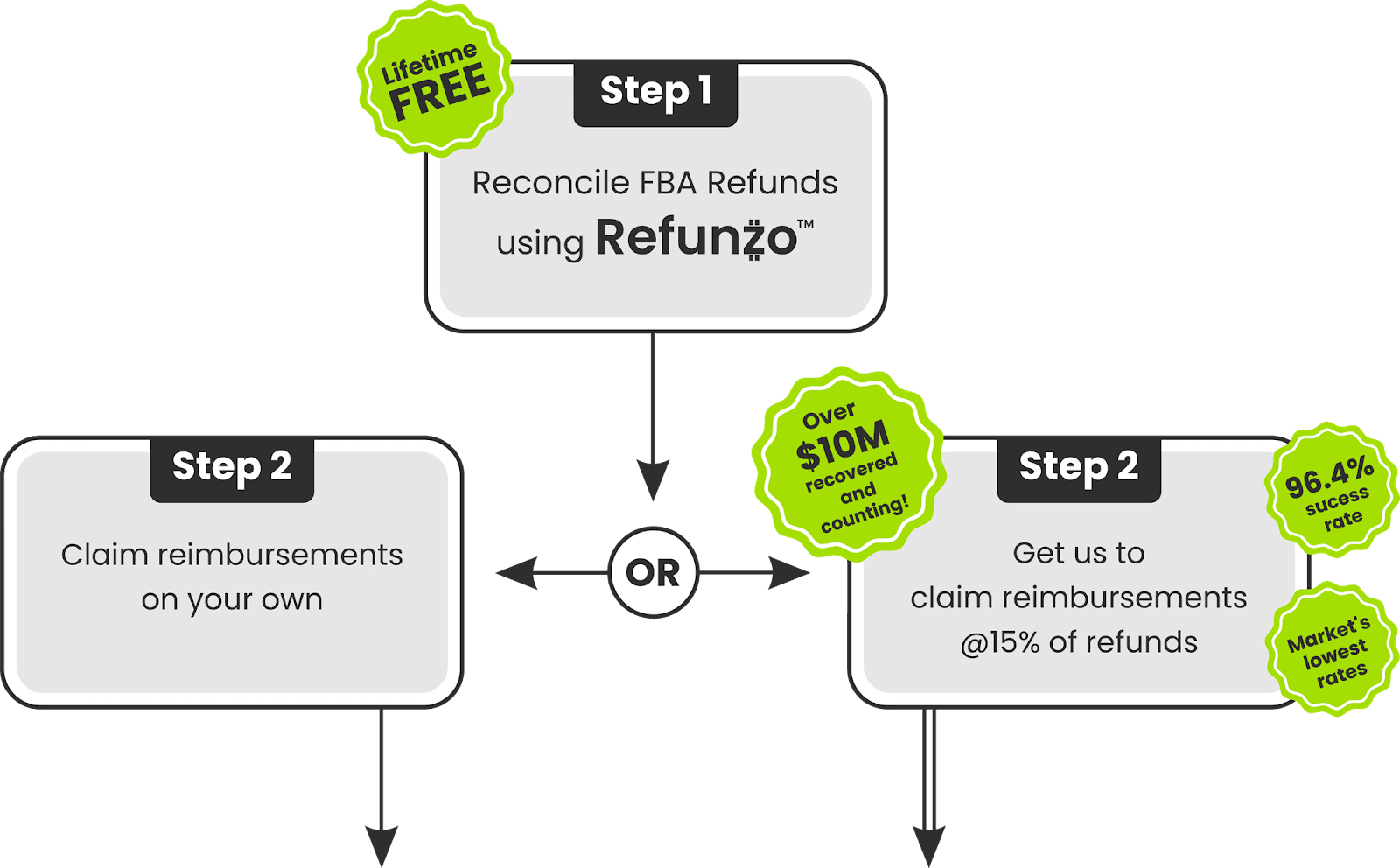
Connect your Amazon account to the Refunzo web app. It takes about 2 minutes with no complex setup, no technical knowledge required. Once connected, Refunzo runs a comprehensive reconciliation check based on over 20 criteria. Refunzo analyses:
Lost and damaged inventory values vs. reimbursements received
FBA fee discrepancies and overcharges across all transactions
Removal order errors and shortages
Customer return discrepancies where refunds don't match costs
Warehouse processing errors and internal damages
Underpaid reimbursement
You receive a detailed report showing the exact amount Amazon owes you. Not an estimate. Not a ballpark figure. An exact, documented amount based on a thorough analysis of your entire account history within the claimable timeframe.
Step 2: Category-level dashboard visibility
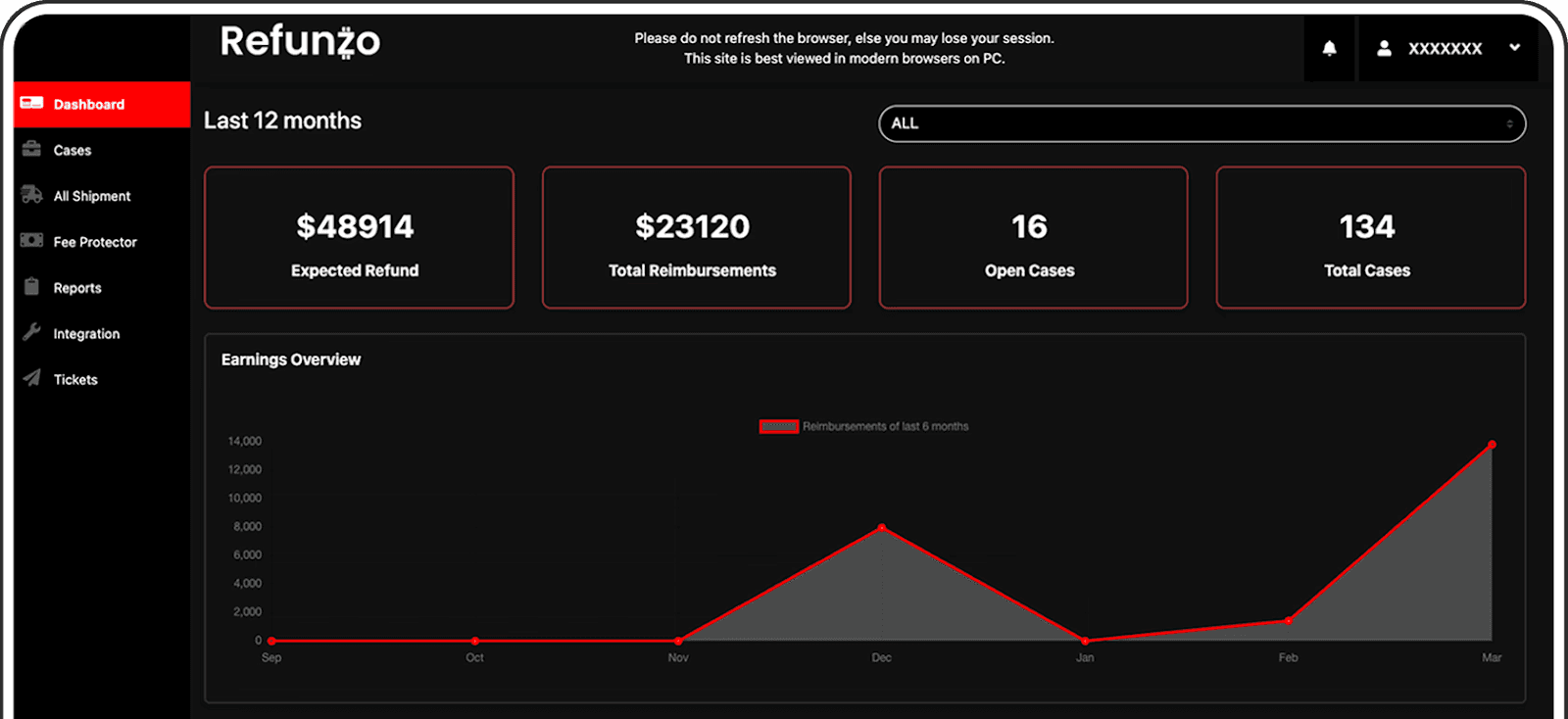
The complete dashboard shows you which categories are bleeding the most money through underpaid reimbursements. It shows the expected reimbursement, total reimbursement, open cases, and total cases.
This category-level breakdown is impossible to achieve manually and becomes even more valuable under the new policy framework, where certain categories have different claim windows, documentation requirements, and manufacturing cost opportunities.
You can immediately see where your business is most vulnerable to underpaid reimbursements and make strategic decisions about inventory management, pricing strategies, and documentation priorities.
Step 3: Personalized support for each case
Refunzo's Amazon reimbursement specialist opens cases with Amazon Seller Support on your behalf with proper 2025 policy citations. It provides all necessary documentation and evidence (invoices, manufacturing costs, landed costs, shipping records) in the exact format Amazon requires.
It identifies which specific cases qualify for manufacturing cost reimbursement claims vs. selling price claims and handles all back-and-forth communication with Seller Support, responding to requests for additional information.
They follow up persistently through Amazon's enhanced investigation process, which often requires multiple touchpoints. Ensures every claim is thoroughly checked and accurately processed according to current policy guidelines.
Navigates disputes over automated adjustment calculations, presenting evidence for manual review, and tracks each case from opening through final resolution. They monitor until full refunds are credited into your bank account.
This personalized, hands-on approach means you don't spend hours arguing with Seller Support about how to dispute underpaid reimbursement claims or new policy interpretations around manufacturing cost vs. selling price calculations.
You don't chase down documentation, write follow-up emails, or track case numbers across multiple open tickets. Refunzo handles everything while you focus on growing your business.
The bottom line
Every underpaid reimbursement is money that belongs to you. It’s not a “cost of doing business” you should accept; it’s your profit margin walking out the door every single month.
When the Amazon reimbursement amount is wrong, what to do becomes the real challenge, finding these gaps accurately and recovering the money efficiently before the claim window closes. The challenge is finding them accurately and recovering the money efficiently before the claim window closes.
So, let Refunzo's Amazon reconciliation audit system find every discrepancy, and manage all disputes with personalized attention, and get your money back, while you focus on actually growing your business and serving your customers.
Get started today!
FAQs
What does "Amazon reimbursement underpaid" mean?
Amazon reimbursed you for lost or damaged inventory but paid less than your actual cost, creating a gap between what you're owed and what you received.
How can I tell if Amazon underpaid my reimbursement?
Compare the reimbursement amount Amazon paid against your invoice cost; if there's a difference, you've been underpaid. Refunzo automates this check across all your transactions instantly.
Why does Amazon reimburse less than my invoice cost?
Amazon uses 90-day average selling prices, outdated cost values, or deducts incorrect FBA fees, none of which reflect your actual replacement cost or what you paid.
How do I dispute an underpaid reimbursement with Amazon?
Provide your supplier invoice, manufacturing cost documentation, shipment records, and Amazon's 2025 policy citations. Refunzo prepares and submits all this documentation automatically for each case.
How does Refunzo find underpaid reimbursements in my account?
Refunzo checks 20+ criteria then shows you exactly which categories have gaps and handles full recovery with personalized case management.
TL;DR
Amazon often reimburses less than your real product cost for lost or damaged inventory, and most sellers don’t notice the shortfall.
Underpaid reimbursements happen due to pricing changes, incorrect FBA fees, outdated cost data, partial reimbursements, and currency conversion issues.
Amazon’s 2025 policy changes require stronger cost documentation and introduce automated adjustments that can further reduce reimbursement amounts.
Manually tracking these gaps is extremely difficult and time-consuming, especially across hundreds of transactions and categories.
Refunzo automatically audits your account using 20+ checks to find exact reimbursement gaps within the claim window.
Refunzo handles case creation, documentation, follow-ups, and disputes so you recover the full amount Amazon actually owes you.
You just received a reimbursement from Amazon for a lost or damaged item. Great news, right?
You check the amount. It looks lower than expected. You compare it with your invoice, and something doesn’t add up. Where did the missing amount go?
This is one of the most common and overlooked problems Amazon sellers face. It is underpaid reimbursements. Amazon owes you money; they acknowledge it, and they even send you a reimbursement, but it's not the full amount.
Most sellers don't even notice. That shortfall slips through undetected. Multiply that by dozens or hundreds of transactions every month, and suddenly you're losing thousands without realizing it.
This blog talks about why this happens, how to spot it, and most importantly, how to get every dollar Amazon actually owes you.
The hidden cost of Amazon reimbursement underpaid issues
When inventory gets lost, damaged, destroyed, or removed incorrectly, Amazon is supposed to reimburse you at the item's actual value. But the reimbursement amount Amazon calculates doesn't always match what you actually paid for the goods. Here are the common scenarios where Amazon reimbursed less than the cost of goods.
#1 Pricing discrepancies
Amazon often reimburses based on the recent selling price rather than your actual cost. If you recently ran a discount or your price fluctuated, you might get reimbursed at the lower price point, even though your cost of goods stayed the same.
#2 FBA fee calculation errors
Amazon deducts incorrect FBA fees from your reimbursement, leaving you with less than you should receive. These fee miscalculations often involve wrong weight classes or dimension errors in Amazon's system.
#3 Inventory value mismatches
Amazon's system might have an outdated cost value on file for your product, resulting in reimbursements that don't reflect your current invoice costs. If you updated your supplier or your costs increased, Amazon might still be using your old, lower cost figure.
#4 Partial reimbursements
You send in a case of 12 units. Amazon loses 3. You get reimbursed for 2. The math doesn't add up, but unless you're tracking carefully with detailed reconciliation, you'd never know one unit is missing from your reimbursement.
#5 Currency conversion issues
For international sellers or those with global inventory, conversion rates and regional pricing can create gaps between actual costs and reimbursement amounts, especially when exchange rates fluctuate between purchase and reimbursement dates.
You're essentially paying Amazon for their mistakes. Your margins shrink. Your cash flow suffers. The worst of all, you might not even realize it's happening until you dig deep into your financial records.
Amazon 2025 reimbursement policy changes explained
If reimbursement gaps on Amazon were already confusing, Amazon’s 2025 reimbursement policy updates have made them even harder for sellers to track and manage.
Amazon now considers manufacturing cost as a reimbursement baseline for certain sellers, particularly private label brands and manufacturers. If you can provide documented manufacturing costs (including raw materials, production, and landed costs), Amazon may reimburse at this rate rather than the selling price.
Amazon now requires more detailed proof of value for reimbursement claims, including supplier invoices with SKU-level details, manufacturing cost breakdowns showing each component, landed costs with freight and duty documentation, and shipping records.
While the general 18-month claim window remains for most products, specific product categories (particularly high-value electronics, jewelry, watches, and collectibles) now have reduced claim periods of just 12 months, giving sellers less time to identify and dispute underpaid reimbursements in these higher-value categories.
Amazon introduced AI-powered systems that automatically adjust reimbursement amounts based on "market conditions," "comparable product pricing," and "category benchmarks." While intended to create fairness across sellers, these automated adjustments often result in lower reimbursements than actual replacement costs, particularly for unique products without direct comparables.
Amazon now conducts more thorough investigations before approving reimbursements, which is good for preventing fraud but also means longer wait times (now averaging 2 to 4 weeks instead of 1 to 2 weeks), more back-and-forth communication requirements, and more opportunities for calculation errors to slip through during the extended review process.
According to Amazon's updated FBA policies effective January 2025, sellers must now prove "documented evidence of cost" rather than relying on estimated values, making invoice tracking, manufacturing cost records, and landed cost documentation more critical than ever for successful reimbursement claims.
How Refunzo finds your reimbursement gaps automatically
Refunzo is an Amazon reconciliation tool designed to help sellers clearly see where reimbursement amounts fall short. It automatically checks Amazon’s reimbursement data against your actual product and cost details to find underpaid cases that are easy to miss manually.
Step 1: Reconcile using the Refunzo web app
Connect your Amazon account to the Refunzo web app. It takes about 2 minutes with no complex setup, no technical knowledge required. Once connected, Refunzo runs a comprehensive reconciliation check based on over 20 criteria. Refunzo analyses:
Lost and damaged inventory values vs. reimbursements received
FBA fee discrepancies and overcharges across all transactions
Removal order errors and shortages
Customer return discrepancies where refunds don't match costs
Warehouse processing errors and internal damages
Underpaid reimbursement
You receive a detailed report showing the exact amount Amazon owes you. Not an estimate. Not a ballpark figure. An exact, documented amount based on a thorough analysis of your entire account history within the claimable timeframe.
Step 2: Category-level dashboard visibility
The complete dashboard shows you which categories are bleeding the most money through underpaid reimbursements. It shows the expected reimbursement, total reimbursement, open cases, and total cases.
This category-level breakdown is impossible to achieve manually and becomes even more valuable under the new policy framework, where certain categories have different claim windows, documentation requirements, and manufacturing cost opportunities.
You can immediately see where your business is most vulnerable to underpaid reimbursements and make strategic decisions about inventory management, pricing strategies, and documentation priorities.
Step 3: Personalized support for each case
Refunzo's Amazon reimbursement specialist opens cases with Amazon Seller Support on your behalf with proper 2025 policy citations. It provides all necessary documentation and evidence (invoices, manufacturing costs, landed costs, shipping records) in the exact format Amazon requires.
It identifies which specific cases qualify for manufacturing cost reimbursement claims vs. selling price claims and handles all back-and-forth communication with Seller Support, responding to requests for additional information.
They follow up persistently through Amazon's enhanced investigation process, which often requires multiple touchpoints. Ensures every claim is thoroughly checked and accurately processed according to current policy guidelines.
Navigates disputes over automated adjustment calculations, presenting evidence for manual review, and tracks each case from opening through final resolution. They monitor until full refunds are credited into your bank account.
This personalized, hands-on approach means you don't spend hours arguing with Seller Support about how to dispute underpaid reimbursement claims or new policy interpretations around manufacturing cost vs. selling price calculations.
You don't chase down documentation, write follow-up emails, or track case numbers across multiple open tickets. Refunzo handles everything while you focus on growing your business.
The bottom line
Every underpaid reimbursement is money that belongs to you. It’s not a “cost of doing business” you should accept; it’s your profit margin walking out the door every single month.
When the Amazon reimbursement amount is wrong, what to do becomes the real challenge, finding these gaps accurately and recovering the money efficiently before the claim window closes. The challenge is finding them accurately and recovering the money efficiently before the claim window closes.
So, let Refunzo's Amazon reconciliation audit system find every discrepancy, and manage all disputes with personalized attention, and get your money back, while you focus on actually growing your business and serving your customers.
Get started today!
FAQs
What does "Amazon reimbursement underpaid" mean?
Amazon reimbursed you for lost or damaged inventory but paid less than your actual cost, creating a gap between what you're owed and what you received.
How can I tell if Amazon underpaid my reimbursement?
Compare the reimbursement amount Amazon paid against your invoice cost; if there's a difference, you've been underpaid. Refunzo automates this check across all your transactions instantly.
Why does Amazon reimburse less than my invoice cost?
Amazon uses 90-day average selling prices, outdated cost values, or deducts incorrect FBA fees, none of which reflect your actual replacement cost or what you paid.
How do I dispute an underpaid reimbursement with Amazon?
Provide your supplier invoice, manufacturing cost documentation, shipment records, and Amazon's 2025 policy citations. Refunzo prepares and submits all this documentation automatically for each case.
How does Refunzo find underpaid reimbursements in my account?
Refunzo checks 20+ criteria then shows you exactly which categories have gaps and handles full recovery with personalized case management.
Related post

FBA Reimbursement
Multi-marketplace reconciliation is broken? How Refunzo helps global Amazon sellers get their money back
Multi-marketplace reconciliation is broken? How Refunzo helps global Amazon sellers get their money back
Multi-marketplace reconciliation is broken? How Refunzo helps global Amazon sellers get their money back
Multi-marketplace reconciliation is broken? How Refunzo helps global Amazon sellers get their money back
Mar 25, 2026
|
12 mins
Amazon FBA Reimbursements
Stop revenue loss: Handle Amazon reversed reimbursement like a pro
Stop revenue loss: Handle Amazon reversed reimbursement like a pro
Stop revenue loss: Handle Amazon reversed reimbursement like a pro
Stop revenue loss: Handle Amazon reversed reimbursement like a pro
Mar 7, 2026
|
12mins
Amazon FBA Reimbursements
Amazon reimbursement report every seller must check to claim missing reimbursements
Amazon reimbursement report every seller must check to claim missing reimbursements
Amazon reimbursement report every seller must check to claim missing reimbursements
Amazon reimbursement report every seller must check to claim missing reimbursements
Mar 2, 2026
|
12 mins

Stay updated by subscribing
to our newsletter.
Stay updated by subscribing
to our newsletter.
Stay informed and up-to-date with the latest news and updates
from our company by subscribing to our newsletter.
Stay informed and up-to-date
with the latest news and updates
from our company by subscribing to
our newsletter.