
Amazon FBA Warehousing: Costs, Benefits & Hidden Fees
Apr 9, 2026
Apr 9, 2026
TL;DR
Amazon FBA warehousing is a hands-off fulfillment model where Amazon manages storage, shipping, and returns, but it reduces seller control and introduces risks like inventory errors and hidden fees.
Core FBA costs include fulfillment, storage, long-term storage, inbound placement, and utilization surcharges, all of which significantly impact seller margins in 2026.
Hidden losses, such as damaged, lost, or miscounted inventory and fee overcharges, are common, and sellers must actively audit and file reimbursement claims to recover money.
FBA provides major advantages, including Prime eligibility, faster shipping, scalability, and multi-channel fulfillment, which can increase conversions by 30 to 50%.
Key operational challenges include stockouts, stranded inventory, inbound discrepancies, and long-term storage fees, all requiring consistent monitoring and inventory planning.
Effective FBA management in 2026 requires regular reconciliation, accurate cost tracking, and strategic inventory control to maintain profitability and recover lost revenue.
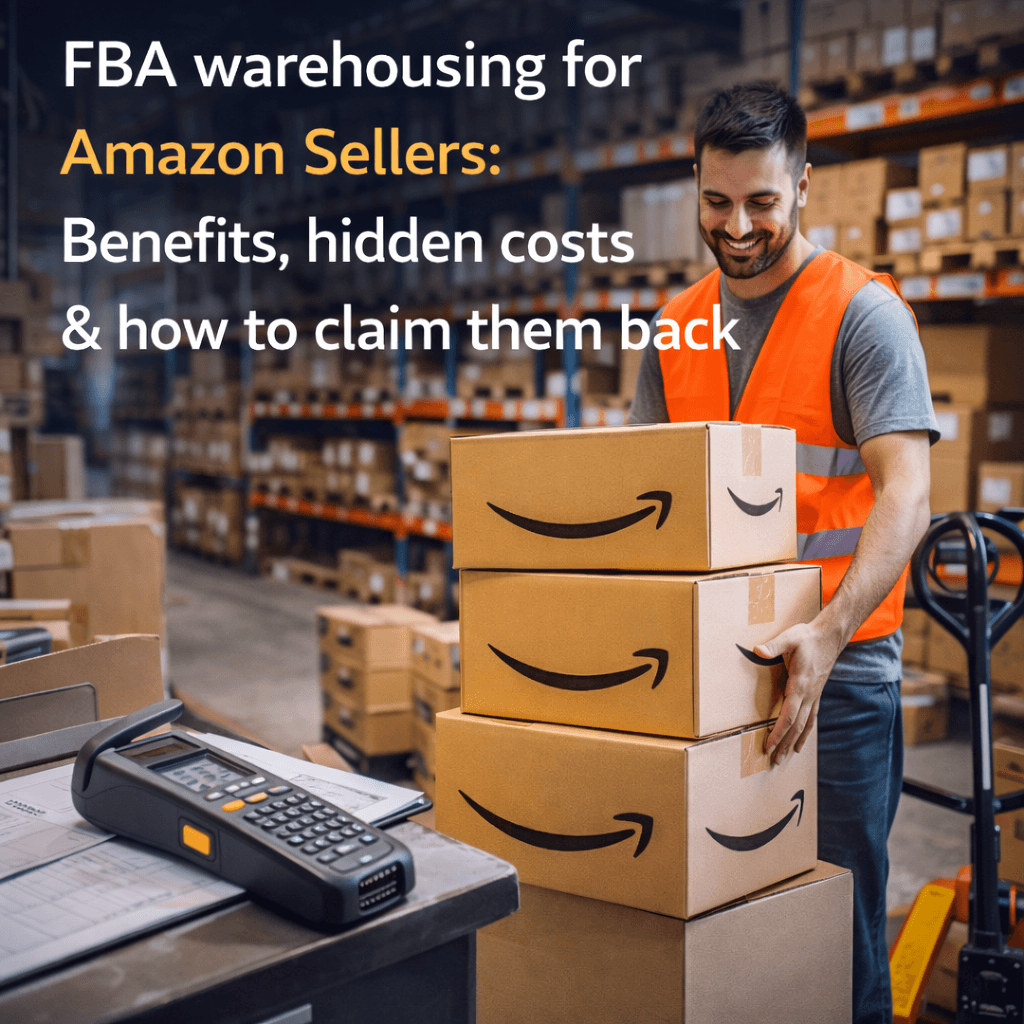
If you sell on Amazon, FBA warehousing is probably central to how your business runs. You send your products to Amazon's fulfillment centers, and Amazon takes care of the storage, picking, packing, shipping, and even customer returns.
But here's what most sellers don't realize until it's too late: FBA warehousing comes with a layer of hidden costs, inventory errors, and fee overcharges that quietly eat into your margins every single month.
This guide breaks down everything you need to know, from how it works and what it costs, to the benefits it brings and the challenges you'll face. We'll show you exactly how to claim back money Amazon owes you when things go wrong.
What is FBA warehousing, and how does it work?
FBA warehousing is Amazon's fulfillment program, where third-party sellers ship their inventory to Amazon's fulfillment centers. Once your products arrive, Amazon stores them, and when a customer places an order, Amazon handles the entire process of picking, packing, shipping, and managing returns.
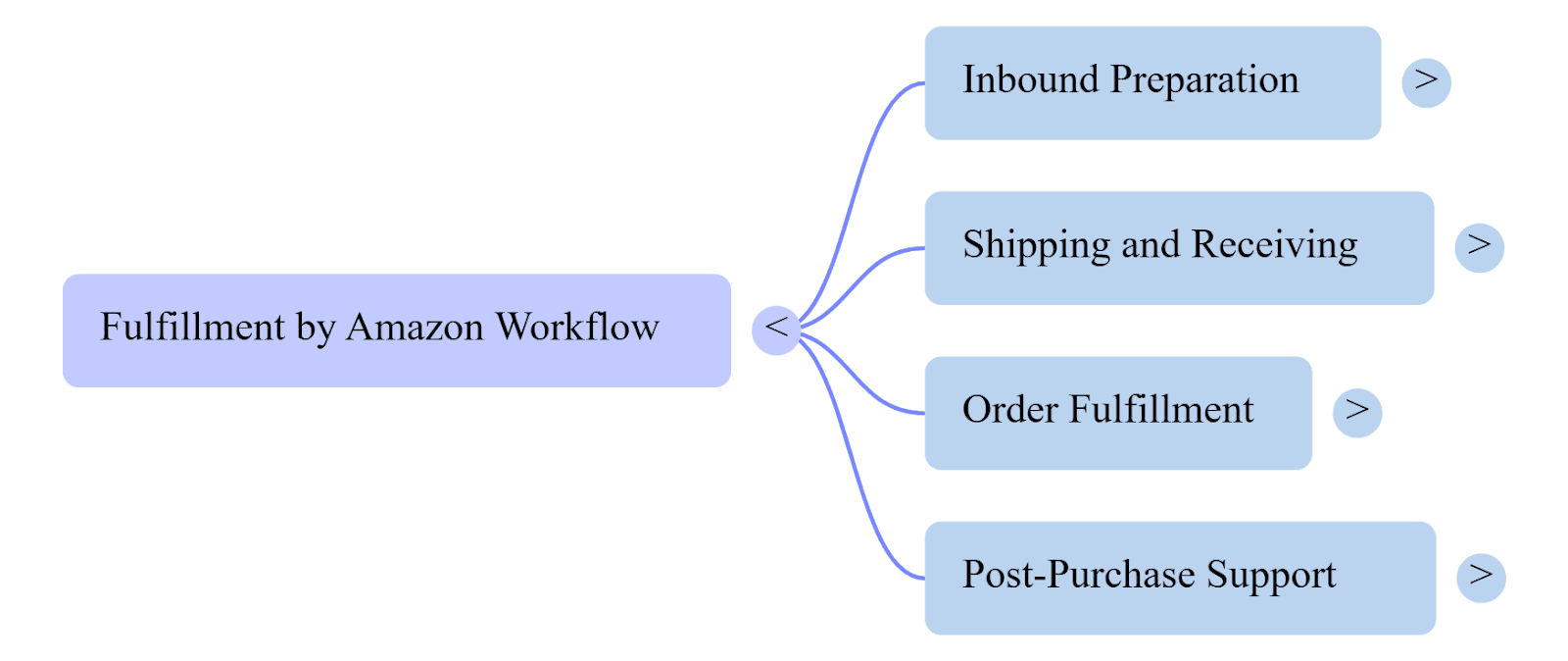
Here's the basic flow:
You create a shipment plan in Seller Central and prepare your products according to Amazon's packaging and labeling requirements.
You ship your inventory to a designated Amazon fulfillment center.
Amazon receives, inspects, and stores your products.
When a customer orders, Amazon picks, packs, and ships it.
Amazon handles customer service and returns on your behalf.
It's a hands-off fulfillment model, and that's exactly why millions of sellers use it. But the trade-off is that you hand over control, and with that comes the risk of inventory discrepancies, unexpected fees, and errors you won't even know about unless you're actively looking.
FBA warehouse types: What are your options?
Not all Amazon FBA storage works the same way. Understanding the different FBA warehouse types helps you make smarter decisions about where and how you store your inventory.
Amazon FBA Fulfillment Centers: These are the standard centers where your products are stored and shipped directly to customers. They're ideal for fast-moving inventory because Amazon keeps stock close to where demand is highest.
Amazon Warehousing and Distribution (AWD): AWD is Amazon's upstream bulk storage solution. It's designed for sellers who want to store larger quantities at a lower cost before stock gets distributed into FBA fulfillment centers.
Third-Party (3PL) Warehouses: Many FBA sellers also use third-party warehouses to stage inventory before sending it to Amazon. This is a smart way to avoid long-term Amazon FBA storage fees on slow-moving products. You keep the bulk of your stock at a 3PL and only send what you expect to sell within the next 60 to 90 days.
How much does Amazon FBA warehousing cost?
This is the question every seller asks, and it depends on your product size, weight, sales velocity, and the time of year. Here's a full breakdown.
Fee Type | Description | Cost (2026) |
Fulfillment Fees | Covers picking, packing, and shipping per unit | $2.92 to $5.42 (standard under 20 lbs); $8.13 – $137+ (oversized) |
Monthly Storage Fees | Charged per cubic foot for storing inventory in Amazon warehouses | $0.78 to $2.40 per cubic foot (higher in Oct to Dec) |
Long-Term Storage Fees | Applied to inventory stored for more than 365 days | $6.90 to $15 per cubic foot |
Inbound Placement Fees | Cost for distributing inventory across multiple fulfillment centers | ~ $0.05 per unit (standard size); free for AWD users |
Storage Utilization Surcharges | Extra charges when inventory exceeds 22 weeks of supply | Up to $1.88 per cubic foot (for 52+ weeks stock) |
Other fees to watch:
Low Inventory Level Fee: It is triggered when your 30 and 90-day supply drops below 28 days.
Returns processing fees increased in 2026.
Removal and disposal fees: They are charged when you want inventory sent back or discarded.
Aged inventory surcharges: It for items in the 180 to 365 day range.
The real cost of FBA warehousing isn't just what's on your fee report. It's also the money Amazon owes you for inventory they've lost, damaged, or miscounted, and that figure adds up fast.
Benefits of Amazon FBA warehousing for sellers
Prime Eligibility: FBA products automatically get the Prime badge. Prime members filter search results to show only Prime-eligible products, which directly boosts your visibility and conversions. FBA products can see a 30 to 50% sales increase from Prime eligibility alone.
Hands-Off Fulfillment: No packing orders, no trips to the post office, no managing a shipping team. One of the biggest benefits of Amazon FBA warehousing is the time it frees up. Sellers focus on sourcing and growing, Amazon handles the rest.
Faster Shipping Amazon's fulfillment network: It delivers 1 to 2 day shipping across its entire network, something almost impossible to replicate independently at the same cost.
Lower Shipping Costs: Amazon negotiates deeply discounted carrier rates. As an FBA seller, you benefit from those rates automatically. Per-unit shipping through FBA is typically much cheaper than shipping independently.
Scalability Without Infrastructure: FBA warehousing scales with your business. Whether you're doing 100 orders a month or 10,000, you don't need to lease warehouse space or hire staff. Amazon's infrastructure grows with you.
Customer Service and Returns Management: Amazon handles all customer inquiries related to shipping and manages the full returns process, saving you time as your order volume grows.
Multi-Channel Fulfillment: Once your inventory is in FBA warehousing, you can use it to fulfill orders from Shopify, Walmart, eBay, and more through Amazon's Multi-Channel Fulfillment program. One inventory pool, multiple sales channels.
FBA warehouse challenges and solutions
FBA warehousing isn't without its problems. Here are the most common challenges and how to handle them.
#1: Inventory loss and damage
Amazon's fulfillment centers process millions of items daily
Products get lost, damaged during receiving, miscounted, or disposed of without authorization
Most sellers don't even notice until they run a proper reconciliation
Solution: Regularly reconcile your inventory against Amazon's records. When discrepancies appear, you're entitled to reimbursement, but Amazon won't automatically pay you. You have to file the claim.
#2: Long-term storage fees
Slow-moving inventory silently racks up storage fees every month
After 365 days, long-term fees kick in and become punishing fast
Most sellers only notice when the fee shows up on their statement
Solution: Monitor your inventory age reports monthly. Use removal orders to pull slow-moving stock before the 365-day mark, or run promotions to clear it. Use a 3PL to stage bulk inventory and only send what you need.
#3: Fee overcharges
Amazon sometimes charges incorrect fulfillment fees due to mismeasured product dimensions or wrong weight classifications
These errors are small per unit , but across hundreds of SKUs and thousands of orders, they add up to real money
Most sellers never audit this and just absorb the loss
Solution: Audit your fee reports regularly and compare against your product's actual dimensions and weight. File a reimbursement claim for any discrepancy you find.
#4: Inbound shipment discrepancies
You ship 500 units, and Amazon receives and credits 480
Those 20 missing units cost you money twice: lost inventory and lost sales
This happens more often than sellers realize, and most never chase it
Solution: Always track your shipment counts carefully. Compare what you sent vs. what Amazon checked in. Any shortfall is potentially reimbursable, and document your shipments so you have evidence when filing.
#5: Stranded inventory
Inventory ends up in Amazon's fulfillment centers without an active listing
It sits there costing, you storage fees but generating zero sales
Easy to miss if you're not checking Seller Central regularly
Solution: Check your Stranded Inventory report in Seller Central every week and fix any listing issues immediately before the fees pile up.
#6: Stockouts
Running out of stock triggers immediate ranking drops and Buy Box loss
Recovery can take weeks and costs far more in lost revenue and ad spend than the stockout itself
Static reorder points set months ago won't protect you when sales velocity spikes
Solution: Set dynamic reorder points that factor in lead time, current sales velocity, and seasonal demand. Use inventory tools that alert you before you hit critical levels.
Conclusion
FBA warehousing gives you Prime eligibility, hands-off fulfillment, and the infrastructure to scale, but it also comes with lost units, fee overcharges, and inbound discrepancies that quietly drain your margins every month.
Refunzo checks your account across 21 reconciliation checkpoints, identifies exactly what Amazon owes you, and handles the entire claims process. Lifetime free to start. They only charge 15% of what gets recovered, nothing if they don't.
Start your free reconciliation with Refunzo
FAQs
How do I calculate my Amazon FBA fees before sending inventory?
Use Amazon's FBA Revenue Calculator in Seller Central, enter your product dimensions, weight, and price to see exact fees. In 2026, factor in the new 3.5% fuel surcharge on top of standard fulfillment costs.
What happens to my FBA inventory if it doesn't sell?
Amazon charges monthly storage fees, and after 365 days, long-term fees of $6.90 to $15 per cubic foot apply. Use removal orders or promotions to clear slow-moving stock before it reaches that threshold.
Is Amazon FBA warehousing worth it for small sellers in 2026?
Is Amazon FBA warehousing worth it for small sellers in 2026?
Yes. If your margins can absorb the fees. Prime eligibility alone can boost conversions 30 to 50%, but you must audit your fees and reimbursements regularly to protect your profits.
How much does Amazon FBA warehousing cost?
Fulfillment fees run $2.92 to $5.42 per unit for standard items, plus $0.78 to $2.40 per cubic foot monthly storage. In 2026, add the new 3.5% fuel surcharge on every unit fulfilled through FBA.
TL;DR
Amazon FBA warehousing is a hands-off fulfillment model where Amazon manages storage, shipping, and returns, but it reduces seller control and introduces risks like inventory errors and hidden fees.
Core FBA costs include fulfillment, storage, long-term storage, inbound placement, and utilization surcharges, all of which significantly impact seller margins in 2026.
Hidden losses, such as damaged, lost, or miscounted inventory and fee overcharges, are common, and sellers must actively audit and file reimbursement claims to recover money.
FBA provides major advantages, including Prime eligibility, faster shipping, scalability, and multi-channel fulfillment, which can increase conversions by 30 to 50%.
Key operational challenges include stockouts, stranded inventory, inbound discrepancies, and long-term storage fees, all requiring consistent monitoring and inventory planning.
Effective FBA management in 2026 requires regular reconciliation, accurate cost tracking, and strategic inventory control to maintain profitability and recover lost revenue.
If you sell on Amazon, FBA warehousing is probably central to how your business runs. You send your products to Amazon's fulfillment centers, and Amazon takes care of the storage, picking, packing, shipping, and even customer returns.
But here's what most sellers don't realize until it's too late: FBA warehousing comes with a layer of hidden costs, inventory errors, and fee overcharges that quietly eat into your margins every single month.
This guide breaks down everything you need to know, from how it works and what it costs, to the benefits it brings and the challenges you'll face. We'll show you exactly how to claim back money Amazon owes you when things go wrong.
What is FBA warehousing, and how does it work?
FBA warehousing is Amazon's fulfillment program, where third-party sellers ship their inventory to Amazon's fulfillment centers. Once your products arrive, Amazon stores them, and when a customer places an order, Amazon handles the entire process of picking, packing, shipping, and managing returns.
Here's the basic flow:
You create a shipment plan in Seller Central and prepare your products according to Amazon's packaging and labeling requirements.
You ship your inventory to a designated Amazon fulfillment center.
Amazon receives, inspects, and stores your products.
When a customer orders, Amazon picks, packs, and ships it.
Amazon handles customer service and returns on your behalf.
It's a hands-off fulfillment model, and that's exactly why millions of sellers use it. But the trade-off is that you hand over control, and with that comes the risk of inventory discrepancies, unexpected fees, and errors you won't even know about unless you're actively looking.
FBA warehouse types: What are your options?
Not all Amazon FBA storage works the same way. Understanding the different FBA warehouse types helps you make smarter decisions about where and how you store your inventory.
Amazon FBA Fulfillment Centers: These are the standard centers where your products are stored and shipped directly to customers. They're ideal for fast-moving inventory because Amazon keeps stock close to where demand is highest.
Amazon Warehousing and Distribution (AWD): AWD is Amazon's upstream bulk storage solution. It's designed for sellers who want to store larger quantities at a lower cost before stock gets distributed into FBA fulfillment centers.
Third-Party (3PL) Warehouses: Many FBA sellers also use third-party warehouses to stage inventory before sending it to Amazon. This is a smart way to avoid long-term Amazon FBA storage fees on slow-moving products. You keep the bulk of your stock at a 3PL and only send what you expect to sell within the next 60 to 90 days.
How much does Amazon FBA warehousing cost?
This is the question every seller asks, and it depends on your product size, weight, sales velocity, and the time of year. Here's a full breakdown.
Fee Type | Description | Cost (2026) |
Fulfillment Fees | Covers picking, packing, and shipping per unit | $2.92 to $5.42 (standard under 20 lbs); $8.13 – $137+ (oversized) |
Monthly Storage Fees | Charged per cubic foot for storing inventory in Amazon warehouses | $0.78 to $2.40 per cubic foot (higher in Oct to Dec) |
Long-Term Storage Fees | Applied to inventory stored for more than 365 days | $6.90 to $15 per cubic foot |
Inbound Placement Fees | Cost for distributing inventory across multiple fulfillment centers | ~ $0.05 per unit (standard size); free for AWD users |
Storage Utilization Surcharges | Extra charges when inventory exceeds 22 weeks of supply | Up to $1.88 per cubic foot (for 52+ weeks stock) |
Other fees to watch:
Low Inventory Level Fee: It is triggered when your 30 and 90-day supply drops below 28 days.
Returns processing fees increased in 2026.
Removal and disposal fees: They are charged when you want inventory sent back or discarded.
Aged inventory surcharges: It for items in the 180 to 365 day range.
The real cost of FBA warehousing isn't just what's on your fee report. It's also the money Amazon owes you for inventory they've lost, damaged, or miscounted, and that figure adds up fast.
Benefits of Amazon FBA warehousing for sellers
Prime Eligibility: FBA products automatically get the Prime badge. Prime members filter search results to show only Prime-eligible products, which directly boosts your visibility and conversions. FBA products can see a 30 to 50% sales increase from Prime eligibility alone.
Hands-Off Fulfillment: No packing orders, no trips to the post office, no managing a shipping team. One of the biggest benefits of Amazon FBA warehousing is the time it frees up. Sellers focus on sourcing and growing, Amazon handles the rest.
Faster Shipping Amazon's fulfillment network: It delivers 1 to 2 day shipping across its entire network, something almost impossible to replicate independently at the same cost.
Lower Shipping Costs: Amazon negotiates deeply discounted carrier rates. As an FBA seller, you benefit from those rates automatically. Per-unit shipping through FBA is typically much cheaper than shipping independently.
Scalability Without Infrastructure: FBA warehousing scales with your business. Whether you're doing 100 orders a month or 10,000, you don't need to lease warehouse space or hire staff. Amazon's infrastructure grows with you.
Customer Service and Returns Management: Amazon handles all customer inquiries related to shipping and manages the full returns process, saving you time as your order volume grows.
Multi-Channel Fulfillment: Once your inventory is in FBA warehousing, you can use it to fulfill orders from Shopify, Walmart, eBay, and more through Amazon's Multi-Channel Fulfillment program. One inventory pool, multiple sales channels.
FBA warehouse challenges and solutions
FBA warehousing isn't without its problems. Here are the most common challenges and how to handle them.
#1: Inventory loss and damage
Amazon's fulfillment centers process millions of items daily
Products get lost, damaged during receiving, miscounted, or disposed of without authorization
Most sellers don't even notice until they run a proper reconciliation
Solution: Regularly reconcile your inventory against Amazon's records. When discrepancies appear, you're entitled to reimbursement, but Amazon won't automatically pay you. You have to file the claim.
#2: Long-term storage fees
Slow-moving inventory silently racks up storage fees every month
After 365 days, long-term fees kick in and become punishing fast
Most sellers only notice when the fee shows up on their statement
Solution: Monitor your inventory age reports monthly. Use removal orders to pull slow-moving stock before the 365-day mark, or run promotions to clear it. Use a 3PL to stage bulk inventory and only send what you need.
#3: Fee overcharges
Amazon sometimes charges incorrect fulfillment fees due to mismeasured product dimensions or wrong weight classifications
These errors are small per unit , but across hundreds of SKUs and thousands of orders, they add up to real money
Most sellers never audit this and just absorb the loss
Solution: Audit your fee reports regularly and compare against your product's actual dimensions and weight. File a reimbursement claim for any discrepancy you find.
#4: Inbound shipment discrepancies
You ship 500 units, and Amazon receives and credits 480
Those 20 missing units cost you money twice: lost inventory and lost sales
This happens more often than sellers realize, and most never chase it
Solution: Always track your shipment counts carefully. Compare what you sent vs. what Amazon checked in. Any shortfall is potentially reimbursable, and document your shipments so you have evidence when filing.
#5: Stranded inventory
Inventory ends up in Amazon's fulfillment centers without an active listing
It sits there costing, you storage fees but generating zero sales
Easy to miss if you're not checking Seller Central regularly
Solution: Check your Stranded Inventory report in Seller Central every week and fix any listing issues immediately before the fees pile up.
#6: Stockouts
Running out of stock triggers immediate ranking drops and Buy Box loss
Recovery can take weeks and costs far more in lost revenue and ad spend than the stockout itself
Static reorder points set months ago won't protect you when sales velocity spikes
Solution: Set dynamic reorder points that factor in lead time, current sales velocity, and seasonal demand. Use inventory tools that alert you before you hit critical levels.
Conclusion
FBA warehousing gives you Prime eligibility, hands-off fulfillment, and the infrastructure to scale, but it also comes with lost units, fee overcharges, and inbound discrepancies that quietly drain your margins every month.
Refunzo checks your account across 21 reconciliation checkpoints, identifies exactly what Amazon owes you, and handles the entire claims process. Lifetime free to start. They only charge 15% of what gets recovered, nothing if they don't.
Start your free reconciliation with Refunzo
FAQs
How do I calculate my Amazon FBA fees before sending inventory?
Use Amazon's FBA Revenue Calculator in Seller Central, enter your product dimensions, weight, and price to see exact fees. In 2026, factor in the new 3.5% fuel surcharge on top of standard fulfillment costs.
What happens to my FBA inventory if it doesn't sell?
Amazon charges monthly storage fees, and after 365 days, long-term fees of $6.90 to $15 per cubic foot apply. Use removal orders or promotions to clear slow-moving stock before it reaches that threshold.
Is Amazon FBA warehousing worth it for small sellers in 2026?
Is Amazon FBA warehousing worth it for small sellers in 2026?
Yes. If your margins can absorb the fees. Prime eligibility alone can boost conversions 30 to 50%, but you must audit your fees and reimbursements regularly to protect your profits.
How much does Amazon FBA warehousing cost?
Fulfillment fees run $2.92 to $5.42 per unit for standard items, plus $0.78 to $2.40 per cubic foot monthly storage. In 2026, add the new 3.5% fuel surcharge on every unit fulfilled through FBA.
Related post
Amazon FBA
Amazon FBA Warehousing: Costs, Benefits & Hidden Fees
Amazon FBA Warehousing: Costs, Benefits & Hidden Fees
Amazon FBA Warehousing: Costs, Benefits & Hidden Fees
Amazon FBA Warehousing: Costs, Benefits & Hidden Fees
Apr 9, 2026
|
10 min

FBA Reimbursement
Multi-marketplace reconciliation is broken? How Refunzo helps global Amazon sellers get their money back
Multi-marketplace reconciliation is broken? How Refunzo helps global Amazon sellers get their money back
Multi-marketplace reconciliation is broken? How Refunzo helps global Amazon sellers get their money back
Multi-marketplace reconciliation is broken? How Refunzo helps global Amazon sellers get their money back
Mar 25, 2026
|
12 mins
Amazon FBA Reimbursements
Stop revenue loss: Handle Amazon reversed reimbursement like a pro
Stop revenue loss: Handle Amazon reversed reimbursement like a pro
Stop revenue loss: Handle Amazon reversed reimbursement like a pro
Stop revenue loss: Handle Amazon reversed reimbursement like a pro
Mar 7, 2026
|
12mins

Stay updated by subscribing
to our newsletter.
Stay updated by subscribing
to our newsletter.
Stay informed and up-to-date with the latest news and updates
from our company by subscribing to our newsletter.
Stay informed and up-to-date
with the latest news and updates
from our company by subscribing to
our newsletter.